


Anjali Rao is coming
to Portland Yoga Collective
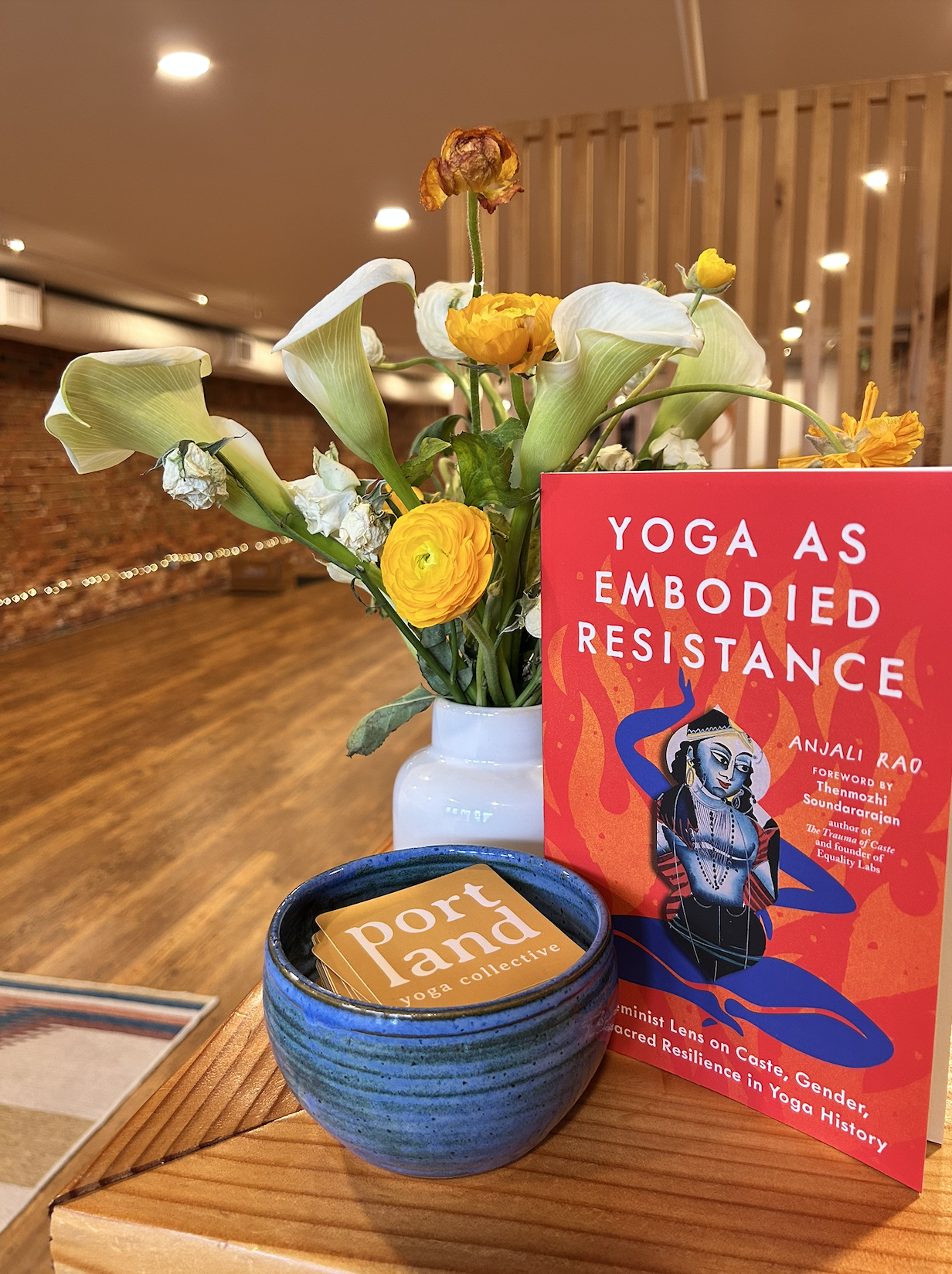
We’re excited to welcome Anjali Rao to Portland Yoga Collective this March for two powerful and informative workshops. Anjali’s book, Yoga as Embodied Resistance, illuminates the essential—but often unseen—relationships between caste and gender in yoga, bridging scholarship, history and cultural analysis. We’ll discuss how yoga can be a vital path to resistance, agency and collective liberation. Come with questions, curiosities and an open mind to explore and challenge our notions around our practice.
Workshop Details
The Story of Yoga: A Decolonial and Feminist Lens on History
Saturday, March 28 at 12:30-3pm
Sliding Scale Workshop | $60, $80, $100
We’re offering 2 half priced scholarships – email jess@portlandyogacollective.com
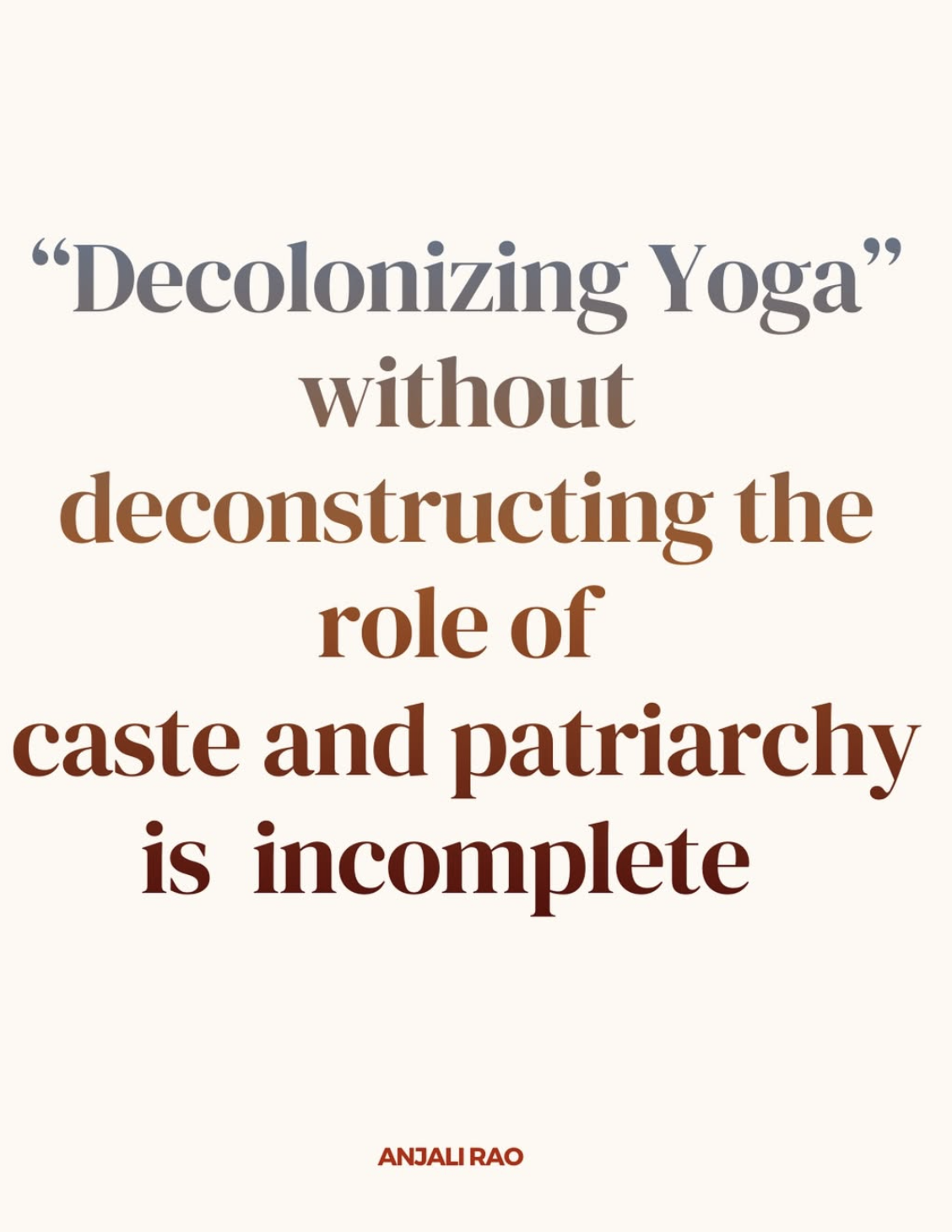
Is Yoga inherently patriarchal? What is feminist history and why is it important and relevant in the context of Yoga? In this workshop, Anjali Rao offers a critical feminist lens on the 2,500 yoga history deconstructing the linkages between caste, gender and power. We trace the complex history of yoga as it traverses through the formations of caste, nation-states, religion and empire and delve into the myriad frameworks in key texts and seek out emergent, common themes in the teachings.
Storytelling as a Liberatory Praxis
Sunday, March 29 at 12-3:30pm
Sliding Scale Workshop | $60, $80, $100
We’re offering 2 half priced scholarships – email jess@portlandyogacollective.com
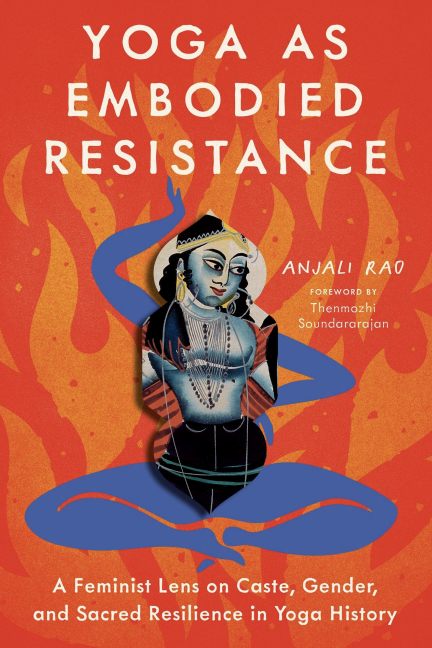
Stories breathe life into the past and connect our vast humanity across generations. Storytelling was one of the integral methods for sharing esoteric and abstract concepts in ways that were relatable to ordinary people living ordinary lives. Liberatory teachings of yoga were conveyed through storytelling. Stories, in addition to being informative and laden with insight into the human experience, are chronicles of the times that shed light on the sociopolitical interplay of gender, caste and religion. Drawing from themes from her first book, Yoga As Embodied Resistance, Anjali Rao leads us into an exploration of extraordinary stories of women, from myth and history who defied societal norms of caste, gender and class. This workshop will have lecture, reflection prompts, journaling and small group discussion. There will also be a book signing from 3-3:30 for Anjali Rao’s book Yoga as Embodied Resistance: A Feminist Lens on Caste, Gender and Sacred Resilience in Yoga History
About Anjali Rao
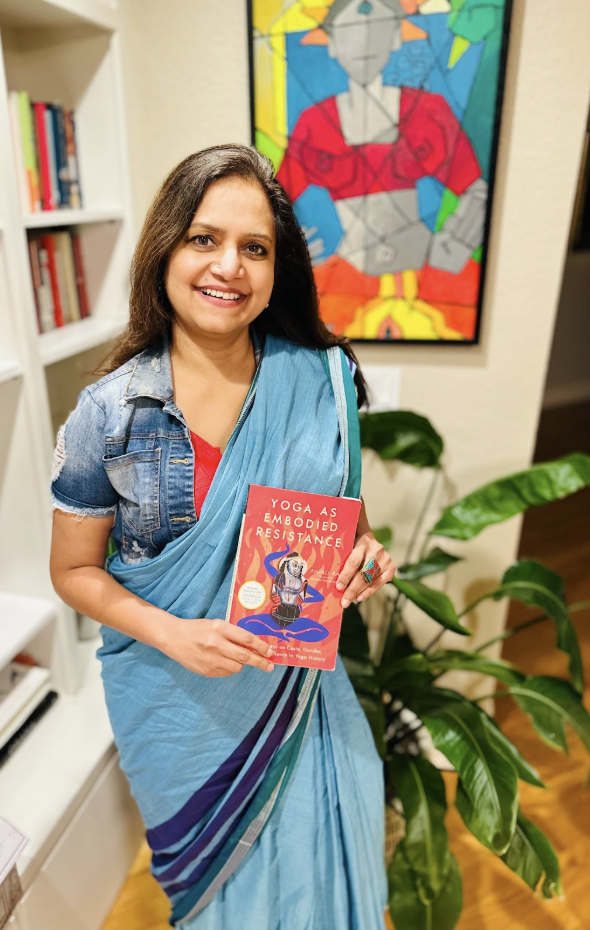
Anjali Rao (she/her) brings an intersectional and decolonial feminist lens to the study of philosophy and yoga history integrating storytelling, art and poetry. Emphasizing an embodied approach, her work interrogates dynamics of power in yoga spaces. She is on the faculty of multiple yoga teacher training programs. She is the host of The Love of Yoga podcast bridging scholarship, activism and yoga. She has served as the President of the Board of Directors of Accessible Yoga Association, a non profit dedicated to ensuring accessibility and equity in yoga spaces to people of all backgrounds.
About the book
Yoga as Embodied Resistance illuminates the essential—but often unseen—relationships between caste and gender in yoga. Bridging scholarship, history, and cultural analysis, yoga educator and practitioner Anjali Rao exposes how caste oppression, patriarchy, and colonization impact contemporary practice and offers readers radical ways to re-envision a yoga grounded in liberation, inquiry, discernment, and even dissent. Rao calls upon us to realize the work of co-creating a compassionate and courageous world, uplifting the stories of women and gender-expansive people who confront caste and gender dominance. The stories, or kathas, reflect different parts of yoga history from the Upanishads, the Puranas, and the Bhakti renaissance—and highlight the seismic shifts in consciousness about the potential of spiritual teachings for social change. She explores:
Foundational histories of yoga, caste, and Hinduism
The tensions among yoga, nationalism, anti-colonialism, and Indigeneity
The impacts and intersections of yoga, gender, caste, and culture
Brahminnical appropriation and its relationship to eros, spirituality and loving devotion
Sanskritization, vernacularization & the impact of patriarchy on bodily expression
Bhakti as a subversive tool of personal agency and anticolonial resistance